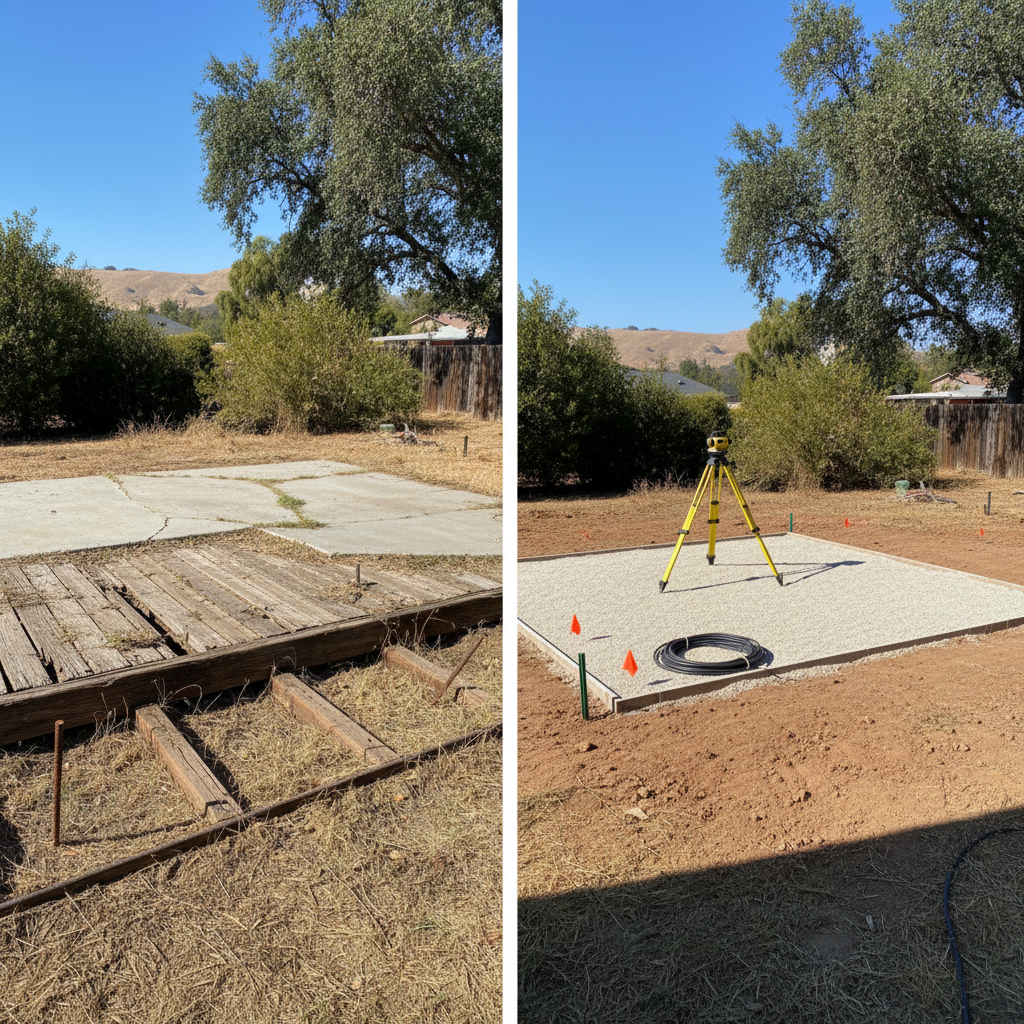
So, you're thinking about adding an ADU to your property right here in Fresno. That's a smart move, especially with how the housing market is these days. But before you can even dream about pouring concrete or framing walls, you absolutely have to figure out what's going on under your feet. That means a site assessment, and usually, you've got two main choices: basic soil testing or a full-blown geotechnical report. Which one's right for you?
Basic Soil Testing: A Quick Look
Most of the time, when people talk about 'soil testing' for an ADU, they're picturing a pretty simple process. This usually means a contractor or an engineer comes out, digs a few small holes—maybe a couple of feet deep—and grabs some samples. They're checking for the basics: what kind of soil you've got (is it clay, sand, or silt?), how well it drains, and its general ability to bear weight. Think of it like a quick check-up for your ground.
Cost: This is definitely the cheaper option. You're probably looking at a few hundred to maybe a thousand bucks, depending on how many samples they take and if your lot is particularly tricky. It's a good starting point if you just want a preliminary idea, or if your ADU is small and light, like converting an existing detached garage that won't add much load.
Durability & Maintenance: The 'durability' here isn't about the test itself, of course, but what it tells you about your foundation's future. A basic test gives you enough information to design a standard foundation. If your soil is fairly uniform and stable, this might be all you need for a structure that lasts. As for maintenance, if the foundation is designed correctly for the soil, you shouldn't run into any unusual problems.
Appearance: It really doesn't affect how things look. The holes are small, and they get filled back in. No big deal.
When it's good: For smaller, simpler ADUs on properties where you don't suspect any major soil issues. If you're in an established Fresno neighborhood like Fig Garden or Old Fig, and homes nearby haven't had foundation problems, a basic test might be enough. It's also often fine for a detached ADU that isn't too close to your main house or other existing buildings.
Geotechnical Report: The Deep Dive
Now, a geotechnical report? That's a completely different beast. This is a much more thorough study of your soil and what's happening underground. A geotechnical engineer will show up, often with specialized equipment, to drill deeper boreholes—sometimes 10, 20, even 30 feet down. They'll pull samples from different depths, run lab tests on them, and analyze things like soil makeup, density, moisture content, groundwater levels, and even how much seismic activity the area might see. They're really looking for potential settling, liquefaction risks (which, let's be honest, isn't a huge worry in most of Fresno's hardpan, but still), and expansive soils.
Cost: This is going to cost you more, plain and simple. You're typically looking at a few thousand dollars, sometimes more, depending on your property's size and how complex the geology is. It's an investment, yes, but one that can save you a ton of headaches and money later on.
Durability & Maintenance: This is where a geo report really shines. With this detailed information, your structural engineer can design a foundation that's perfectly custom-fit to your specific soil conditions. That means a much more durable foundation, less risk of settling, cracking, or other expensive structural issues down the line. It's all about stopping problems before they even start, which translates to less maintenance and fewer repairs for you over the ADU's lifespan.
Appearance: Again, no direct impact on appearance. But a rock-solid foundation definitely prevents ugly cracks in walls or uneven floors, which absolutely affects your ADU's long-term look and value.
When it's essential:
- Larger or multi-story ADUs: More weight means more stress on the soil, period.
- Attached ADUs: Especially if you're tying into an existing foundation. You really don't want the old and new structures settling differently.
- Known soil issues: If you're on fill dirt, near an old ditch, or if you've heard neighbors complaining about foundation problems.
- Sloping lots: Any kind of grade change warrants a much closer look, don't you think?
- City requirements: Sometimes, the City of Fresno's planning department or your structural engineer will just require one, particularly for certain types of construction or if they spot red flags on your property.
My Recommendation for Fresno Homeowners
Look, I've seen a lot of foundations in this town over the years, and I've certainly seen what happens when people try to cut corners. For most ADUs, especially if you're building new from the ground up, I'm always going to lean towards recommending a full geotechnical report. Yes, it costs more up front, but honestly, it's like buying insurance for your foundation. The peace of mind alone is worth every penny.
Fresno's soil can be tricky, you know? We've got areas with good, stable hardpan, but we also have pockets of expansive clays that can swell and shrink with moisture changes, or spots with old agricultural fill. You just won't truly know what you're sitting on without that deep dive.
A good geo report gives your structural engineer everything they need to design a really strong foundation. This isn't just about passing inspection; it's about building an ADU that will stand strong for decades, without you having to worry about costly repairs down the road. It truly protects the longevity and stability of your investment.
At Integrity ADU, we always start by understanding the ground you're building on. It's foundational, literally. Don't skip this step or try to cheap out here. Your ADU's future depends on it.